Onions are Cool Season Vegetables, also known as scallions, bunching onions, green onions (Allium cepa var. cepa from Alliaceae Family. Onion is not native to North America. Unknown in wild. Probably originated in the Middle East or Asia.
What type of onion to select
Almost any onions sown from seed can be scallions (also called bunching onions, green onions, spring onions or green tails).
To have scallions in the summer, plant seeds of an onion variety such as 'Beltsville Bunching' or 'Evergreen Bunching' as early in the spring as you can.
Some varieties, such as 'Long White Bunching', don't ever form bulbs. 'White Portugal' is a bulbing onion grown all over the country and harvested young for sale as scallions.
How to Make Your Own Indestructible Onion Sets:
The sets were fed over the first 70% of the 4 months with a splash of liquid fertilizer.
Plant from seed
Bunching onion transplants for sale at the store are not worth buying. Bunching onions planted from seed will be at the eating stage in just a matter of weeks. Some survive winter temperatures as low as -30F.
Propagate by seed. To grow your own onion sets, sow seeds thickly in a block in midsummer. About 2 months after planting, roll down the tops, forcing the plants to form small bulbs. (Those about the size of a dime work best.)
Plant seed ¼ inch deep, ½ inch apart, in rows 12 to 18 inches apart. Thin to 4-inch spacings for large bulbs, 2-inch spacings for smaller bulbs but higher yields, or 1-inch spacings for scallions.
Days to emergence: 4 to 5.
Raised beds are ideal. Onions are good for intercropping with other garden plants, especially early-maturing spring greens.
Onions have shallow root systems and need consistent moisture
Spring-sown early varieties can be harvested just 60 to 80 days after planting.
Recommended varieties:
From seed (early-maturing):
Arsenal
Early Yellow Globe
Precedent
Green or Bunching:
Evergreen Hardy White
He-Shi-Ko
Long White Bunching
Southport White Bunching
Here are 2 varieties I am growing this year (summer 2012):
Tokyo White Bunching from Burpee:
Evergreen Seeds has a large selection of bunching onions: http://www.evergreenseeds.com/bunchingonion.html
Big Bunch from Burpee (from Home Depot).
References:
Gardening Articles - National Gardening Association http://goo.gl/nO5yT
Explore Cornell - Home Gardening - Vegetable Growing Guides - Growing Guide http://goo.gl/xGERx
Watering Onions - Gardening Association - http://goo.gl/hfRsp
Growing Onions - Gardening Association - http://goo.gl/0P2Cu
Onion Varieties - Gardening Association - http://goo.gl/EHHkU
Planting Onions - Gardening Association - http://goo.gl/lkN1Q
Vegetables for a Fall Garden in the Midwest
Planting Indestructible Onion Bunches: Onion Sets (No) vs Onion Bunches (Yes)- TRG 2014 - YouTube http://buff.ly/1m4iPLN
I actually disagree with Gary (from the video above) - onion sets are just fine to grow green onions quickly. Also, you can harvest the leaves as "cut and come again" lettuce as the plant grows. You can use the same approach to grow green garlic from garlic gloves (Costco's garlic works the best).
Showing posts with label Gardening. Show all posts
Showing posts with label Gardening. Show all posts

Best pruning method for peppers and tomatoes - for sturdy plants and maximum yields (videos)
PROVEN best pruning method for Maximum yields! - YouTube http://bit.ly/XeVSI8
EASY Tomato pruning and Dragon fruit Surprise!! - YouTube http://bit.ly/XeVYQ6
Related reading:
Capsicum Cut Back Update http://buff.ly/12qQqXd
Pruning Hot Pepper Plants for HUGE YIELDS in the Alberta Urban Garden - YouTube http://buff.ly/1f6nwFd
Pruning and clipping pepper plants for better production - YouTube http://buff.ly/1gc6Ubw
How to build a raised garden bed with pavers
You can use a variety of materials to construct raised beds. Most beds are made of wood.
However, pavers make great edging material that lasts virtually forever, and this works great when edging up to a concrete path. A simple paver costs between 40 cents and $2 at Home Depot(depending on size). You will need about 30-60 pavers (depending on size) to build one raised garden bed. Here is a good example of such inexpensive paver: Pavestone Holland 4 in. x 8 in. Concrete Paver, 39 cents http://goo.gl/F2OEF
To get good alignment, get some chalk and draw a line across them to indicate how far you bury one end into the ground. You can also put a wooden stake at each end, and stretch a piece of string across the top at the right height to get the tops level if the ground is uneven and can’t be used as a reference. You can hang a small builders line level on the string to make sure your string sits level if you have one.
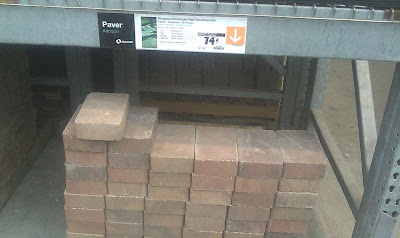
Pavers at Home Depot
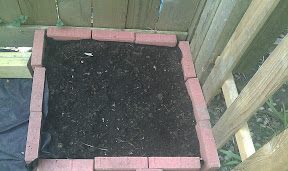
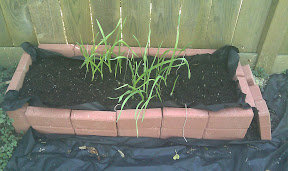
How to Build a Raised Island Garden Bed with Retaining Wall Bricks:
Paverstone Landcaping & Garden Edging - DIY videos from Home Depot:
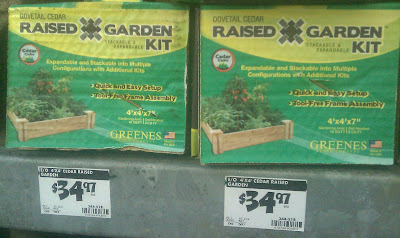
$35 raised bed at Home Depot
How to Make a Raised Garden Bed from Bricks - YouTube http://buff.ly/1f7U9AH
References:
Raised Garden Beds « Deep Green Permaculture http://goo.gl/5o1qa
Raised Beds & Accessories - at The Home Depot http://goo.gl/aj5kE
Greenes 48 in. x 48 in. Cedar Raised Garden Bed, $34.97 at The Home Depot http://goo.gl/FtSK5
How to Build a DIY Raised Garden Bed - The Home Depot http://goo.gl/9nqyc
Pavers & Step Stones at The Home Depot http://goo.gl/bMmD0
Successful Raised Bed Garden - Cement Block Construction - YouTube http://goo.gl/4q34e
Home Depot Buying Guide: Pavers http://goo.gl/bPc2T
Raised bed with pavers - Minneapolis Square Foot Gardening Plan | My Square Foot Garden http://bit.ly/VklZML
However, pavers make great edging material that lasts virtually forever, and this works great when edging up to a concrete path. A simple paver costs between 40 cents and $2 at Home Depot(depending on size). You will need about 30-60 pavers (depending on size) to build one raised garden bed. Here is a good example of such inexpensive paver: Pavestone Holland 4 in. x 8 in. Concrete Paver, 39 cents http://goo.gl/F2OEF
To get good alignment, get some chalk and draw a line across them to indicate how far you bury one end into the ground. You can also put a wooden stake at each end, and stretch a piece of string across the top at the right height to get the tops level if the ground is uneven and can’t be used as a reference. You can hang a small builders line level on the string to make sure your string sits level if you have one.
Pavers at Home Depot
How to Build a Raised Island Garden Bed with Retaining Wall Bricks:
Paverstone Landcaping & Garden Edging - DIY videos from Home Depot:
$35 raised bed at Home Depot
How to Make a Raised Garden Bed from Bricks - YouTube http://buff.ly/1f7U9AH
References:
Raised Garden Beds « Deep Green Permaculture http://goo.gl/5o1qa
Raised Beds & Accessories - at The Home Depot http://goo.gl/aj5kE
Greenes 48 in. x 48 in. Cedar Raised Garden Bed, $34.97 at The Home Depot http://goo.gl/FtSK5
How to Build a DIY Raised Garden Bed - The Home Depot http://goo.gl/9nqyc
Pavers & Step Stones at The Home Depot http://goo.gl/bMmD0
Successful Raised Bed Garden - Cement Block Construction - YouTube http://goo.gl/4q34e
Home Depot Buying Guide: Pavers http://goo.gl/bPc2T
Raised bed with pavers - Minneapolis Square Foot Gardening Plan | My Square Foot Garden http://bit.ly/VklZML
Hungarian wax pepper
The Hungarian wax pepper (sometimes called Hungarian Yellow Wax Banana) is a medium variety of Capsicum annuum with a wide Scoville Scale range of 1,000 to 15,000 Scoville units.
This pepper is usually harvested before maturity when still yellow. It measures between 4"-6" inches in length (102 mm-152 mm) which tapers to a rounded point. Upon maturity, the pepper becomes orange then red in color (as all peppers). Although similar in appearance to banana peppers when immature, it is a different cultivar.
Due to the ease of cultivation and the productivity of the plant, many home gardeners pickle these whole or sliced in rings. These peppers have a sweet, but hot flavor that make them a favorite in many dishes. Hungarian wax peppers are shaped like a carrot, they taper to a rounded point and averages about 6" in length and about 1 1/2" wide. It is considered an early pepper that produces excellent yields on a 24" plant.
In June, I bought a small plant from a local nursery for 80 cents. The plant had 2 fruits when bought and has not grown much in height as of August 1st. I tried one of the peppers and it was not hot. It was easy to dry some of the seeds and I will see if I can grow the pepper from seed next year.
Hungarian Wax Peppers are a creamy-yellow translucent color, very similar to the Banana Wax Pepper. However, these two peppers differ in heat, color and size. The Hungarian Wax has a thin skin with a thick flesh due to its immaturity. Picked at an immature stage, the Hungarian Wax Pepper is yellow and has a sweet hot flavor varying from warm to moderately hot. During the 65 day Hungarian Wax Pepper maturing stage the color changes to an orange-red and the heat rises to an almost inedible intense heat while keeping its sweetness.
Although the pepper can be eaten at any stage, the Hungarian Wax Pepper is most popular in the yellow stages. This pepper is traditionally pickled or made into yellow mole sauces.
The pepper is great for pickling or drying. It is canary yellow turning to bright red when ripe. Harvest starts about 70 days after setting out plants.
Sun: Full Sun
Sowing Method: Indoor Sow
Days to Maturity: 70 days
Height: 18-24 inches
Spread: 16 inches
How to Sow Peppers
Most U.S. gardeners (apart from those living in the Deep South) start pepper plants indoors about 8-10 weeks before transplanting, which should be done 2-3 weeks after the expected last frost. Start indoors in a warm, well-lighted area. Place containers in a south facing window or under grow lights until seedlings emerge. Sow 1-2 seeds 1/4" deep into individual containers filled with seed starting formula. Keep moist. Seedlings emerge in 10-21 days at 75-80 degrees Fahrenheit.
For Illinois, the average last frost is April 15 and average first frost is October 15. Sow by March 15-April 15. Transplant outdoors by May 15-June 15. Peppers are self pollinators.
Fertilizer
As the peppers develop, switch over to a fertilizer higher in Phosphorous and Potassium. Gardeners often make the mistake of providing too much nitrogen. The result is a great looking bushy, green plant, but few fruit.
Days to Maturity
Most peppers take 60 to 80 days to mature.
References:
Wikipedia http://en.wikipedia.org/wiki/Hungarian_wax_pepper
Hungarian Wax Peppers | Melissa's Produce http://goo.gl/r521y
Hot Hungarian Wax Pepper Seeds and Plants, Vegetable Gardening at Burpee.com http://goo.gl/5jaKp
All about peppers - Urban Farmer's Guide http://goo.gl/h2zvM
Peppers - YouTube http://goo.gl/9VcP0
My pepper garden ... - YouTube http://goo.gl/qaouF
How to Grow Peppers - YouTube http://goo.gl/syHPV
Container Peppers by Nurse Amy (video) http://goo.gl/zgDqk
This pepper is usually harvested before maturity when still yellow. It measures between 4"-6" inches in length (102 mm-152 mm) which tapers to a rounded point. Upon maturity, the pepper becomes orange then red in color (as all peppers). Although similar in appearance to banana peppers when immature, it is a different cultivar.
Due to the ease of cultivation and the productivity of the plant, many home gardeners pickle these whole or sliced in rings. These peppers have a sweet, but hot flavor that make them a favorite in many dishes. Hungarian wax peppers are shaped like a carrot, they taper to a rounded point and averages about 6" in length and about 1 1/2" wide. It is considered an early pepper that produces excellent yields on a 24" plant.
In June, I bought a small plant from a local nursery for 80 cents. The plant had 2 fruits when bought and has not grown much in height as of August 1st. I tried one of the peppers and it was not hot. It was easy to dry some of the seeds and I will see if I can grow the pepper from seed next year.
Hungarian Wax Peppers are a creamy-yellow translucent color, very similar to the Banana Wax Pepper. However, these two peppers differ in heat, color and size. The Hungarian Wax has a thin skin with a thick flesh due to its immaturity. Picked at an immature stage, the Hungarian Wax Pepper is yellow and has a sweet hot flavor varying from warm to moderately hot. During the 65 day Hungarian Wax Pepper maturing stage the color changes to an orange-red and the heat rises to an almost inedible intense heat while keeping its sweetness.
Although the pepper can be eaten at any stage, the Hungarian Wax Pepper is most popular in the yellow stages. This pepper is traditionally pickled or made into yellow mole sauces.
The pepper is great for pickling or drying. It is canary yellow turning to bright red when ripe. Harvest starts about 70 days after setting out plants.
Sun: Full Sun
Sowing Method: Indoor Sow
Days to Maturity: 70 days
Height: 18-24 inches
Spread: 16 inches
How to Sow Peppers
Most U.S. gardeners (apart from those living in the Deep South) start pepper plants indoors about 8-10 weeks before transplanting, which should be done 2-3 weeks after the expected last frost. Start indoors in a warm, well-lighted area. Place containers in a south facing window or under grow lights until seedlings emerge. Sow 1-2 seeds 1/4" deep into individual containers filled with seed starting formula. Keep moist. Seedlings emerge in 10-21 days at 75-80 degrees Fahrenheit.
For Illinois, the average last frost is April 15 and average first frost is October 15. Sow by March 15-April 15. Transplant outdoors by May 15-June 15. Peppers are self pollinators.
Fertilizer
As the peppers develop, switch over to a fertilizer higher in Phosphorous and Potassium. Gardeners often make the mistake of providing too much nitrogen. The result is a great looking bushy, green plant, but few fruit.
Days to Maturity
Most peppers take 60 to 80 days to mature.
References:
Wikipedia http://en.wikipedia.org/wiki/Hungarian_wax_pepper
Hungarian Wax Peppers | Melissa's Produce http://goo.gl/r521y
Hot Hungarian Wax Pepper Seeds and Plants, Vegetable Gardening at Burpee.com http://goo.gl/5jaKp
All about peppers - Urban Farmer's Guide http://goo.gl/h2zvM
Peppers - YouTube http://goo.gl/9VcP0
My pepper garden ... - YouTube http://goo.gl/qaouF
How to Grow Peppers - YouTube http://goo.gl/syHPV
Container Peppers by Nurse Amy (video) http://goo.gl/zgDqk
Giant Marconi Pepper
The Sweet Giant Marconi Hybrid Pepper is bred in Italy, and was an All America Selections winner in 2001 (I think).
'Giant Marconi' is an improved Italian grilling pepper. About 6 to 8 inches long, the tapered green pepper will mature to red on the 30 inch plant. 'Giant Marconi' tastes excellent raw but is best when grilled. It has a memorable sweet, smoky flavor. Also called Italian frying peppers, Italianelles, or cubanels, these long peppers are sweet and tender and have a thin skin. They are usually either sautèed in olive oil stuffed and baked with the stems and seeds intact, as the seeds give the peppers their characteristic flavor and sweet taste.
The plant produces large, tapered fruits that are 8" long x 3" wide and can be picked green or left on the plant a little longer and harvested red. The fruits mature earlier to red than other varieties.
Enjoy this wonderful pepper about 72 days after setting plants out in the garden. Grow in full sun, at least 6 hours of direct sun a day, in soil that is rich in organic matter and well drained. Start seeds indoors 6-8 weeks before your normal planting time, after the chance of all frost.
Sun: Full Sun
Sowing Method: Indoor Sow
Days to Maturity: 72 days
Height: 18-24 inches
Spread: 12 inches
I bought one plant from a local nursery in June, and it already had one fruit. It was quite big by the end of July, and the pepper had a taste as described above. If the plant is productive this year, I will buy some additional plants for the next growing season. Since it is labeled a "hybrid" pepper, I am not sure if those can be grown from the seeds from your own plant.
References:
Sweet Giant Marconi Hybrid Pepper Seeds and Plants, Vegetable Gardening at Burpee.com http://goo.gl/JaH74
Giant Marconi pepper - SU/Denver County Extension Master Gardener http://goo.gl/gxlpY
Giant Marconi and Poblano peppers June 16/ 2011 - YouTube http://goo.gl/99b9C
How to grow hot peppers part 10. Pepper profile: The Giant Marconi - YouTube http://goo.gl/kKfzj
'Giant Marconi' is an improved Italian grilling pepper. About 6 to 8 inches long, the tapered green pepper will mature to red on the 30 inch plant. 'Giant Marconi' tastes excellent raw but is best when grilled. It has a memorable sweet, smoky flavor. Also called Italian frying peppers, Italianelles, or cubanels, these long peppers are sweet and tender and have a thin skin. They are usually either sautèed in olive oil stuffed and baked with the stems and seeds intact, as the seeds give the peppers their characteristic flavor and sweet taste.
The plant produces large, tapered fruits that are 8" long x 3" wide and can be picked green or left on the plant a little longer and harvested red. The fruits mature earlier to red than other varieties.
Enjoy this wonderful pepper about 72 days after setting plants out in the garden. Grow in full sun, at least 6 hours of direct sun a day, in soil that is rich in organic matter and well drained. Start seeds indoors 6-8 weeks before your normal planting time, after the chance of all frost.
Sun: Full Sun
Sowing Method: Indoor Sow
Days to Maturity: 72 days
Height: 18-24 inches
Spread: 12 inches
I bought one plant from a local nursery in June, and it already had one fruit. It was quite big by the end of July, and the pepper had a taste as described above. If the plant is productive this year, I will buy some additional plants for the next growing season. Since it is labeled a "hybrid" pepper, I am not sure if those can be grown from the seeds from your own plant.
References:
Sweet Giant Marconi Hybrid Pepper Seeds and Plants, Vegetable Gardening at Burpee.com http://goo.gl/JaH74
Giant Marconi pepper - SU/Denver County Extension Master Gardener http://goo.gl/gxlpY
Giant Marconi and Poblano peppers June 16/ 2011 - YouTube http://goo.gl/99b9C
How to grow hot peppers part 10. Pepper profile: The Giant Marconi - YouTube http://goo.gl/kKfzj
Easy gardening book: Grow Great Grub
Gayla Trail is a writer, photographer, and the creator of the popular gardening project YouGrowGirl.com that started as a blog. A resident of Toronto who has grown a garden on her rooftop for more than 10 years, she is the author of three books on gardening: You Grow Girl: The Groundbreaking Guide to Gardening, Grow Great Grub: Organic Food from Small Spaces, and "Easy Growing: Organic Herbs and Edible Flowers from Small Spaces.
Gayla's love for gardening began with parsley seeds planted in a Styrofoam cup when she was five years old. Inspired by the potato plants her grandmother grew in a bucket on her senior centre's fire escape, Gayla has always gardened in whatever space she had available, including a hot and exposed building rooftop, a community plot, windowsills, shared yard space, fire escapes, a concrete parking pad, stoop steps, and a small urban backyard.
Your patio, balcony, rooftop, front stoop, boulevard, windowsill, planter box, or fire escape is a potential fresh food garden waiting to happen. In Grow Great Grub, Gayla Trail, the founder of the leading online gardening community (YouGrowGirl.com), shows you how to grow your own delicious, affordable, organic edibles virtually anywhere.
Grow Great Grub packs in tips and essential information about:
- Choosing a location and making the most of your soil (even if it’s less than perfect)
- Building a raised bed, compost bin, and self-watering container using recycled materials
- Keeping pests and diseases away from your plants—the toxin-free way
- Growing bountiful crops in pots and selecting the best heirloom varieties
- Cultivating hundreds of plants, from blueberries to Thai basil, to the best tomatoes you’ll ever taste
- Canning, and preserving to make the most of your garden’s generosity
Gayla's love for gardening began with parsley seeds planted in a Styrofoam cup when she was five years old. Inspired by the potato plants her grandmother grew in a bucket on her senior centre's fire escape, Gayla has always gardened in whatever space she had available, including a hot and exposed building rooftop, a community plot, windowsills, shared yard space, fire escapes, a concrete parking pad, stoop steps, and a small urban backyard.
Your patio, balcony, rooftop, front stoop, boulevard, windowsill, planter box, or fire escape is a potential fresh food garden waiting to happen. In Grow Great Grub, Gayla Trail, the founder of the leading online gardening community (YouGrowGirl.com), shows you how to grow your own delicious, affordable, organic edibles virtually anywhere.
Grow Great Grub packs in tips and essential information about:
- Choosing a location and making the most of your soil (even if it’s less than perfect)
- Building a raised bed, compost bin, and self-watering container using recycled materials
- Keeping pests and diseases away from your plants—the toxin-free way
- Growing bountiful crops in pots and selecting the best heirloom varieties
- Cultivating hundreds of plants, from blueberries to Thai basil, to the best tomatoes you’ll ever taste
- Canning, and preserving to make the most of your garden’s generosity
Square Foot Gardening
Square foot gardening is the practice of planning and creating small but intensively planted gardens. The phrase "square foot gardening" was popularized by Mel Bartholomew in a 1981 and subsequent PBS television series.
Mel Bartholomew was a retired former owner of an engineering consulting form who picked up gardening as a hobby. He quickly realized that the single-line gardening needed a lot of improvement in order to become practical for the average person. He applied tactics that he perfected as a business consults and his quest led to the discovery of the Square Foot Gardening (SFG) methods. Despite doubts by the gardening experts, his first book sold more than 1 millions copies and became the bestselling gardening book in the U.S.
Here is Mel's blog: http://www.melbartholomew.com
The garden beds, grid and mix can be purchased online from: http://www.squarefootgardening.com
How many plants to plant per square?
Select a 4-foot-by-4-foot section of your garden and divide it into 16 squares (each section is 1 square foot). Each square will have a different number of plants, depending on what you are re growing. See here: SFG planner PDF - http://goo.gl/r84OL
Examples:
1 plant per square: Tomatoes, peppers, broccoli, cabbage, cauliflower, eggplant, corn, melon, squash
4 plants per square: Lettuce, garlic, Swiss chard
8 plants per square: Pole beans, peas, spinach
16 plants per square: Beets, carrots, radishes, onions
By planting so few plants, you will have many small harvests, and you can easily make more succession plantings and rotate plantings each year.
Mel Bartholomew Introducing Square Foot Gardening:
References:
Square Foot Gardening - Northeast USA - Wayne NJ Plant Hardiness Zone 6 - 7 http://goo.gl/DaRbf
Square foot gardening - Wikipedia http://goo.gl/t8Mg
List of companion plants - Wikipedia http://goo.gl/yojD:
Growing Vegetables by Succession Planting and Square-Foot Gardening - For Dummies http://goo.gl/hn56J
Extension Online Store - Iowa State University free PDF guides http://goo.gl/8uvwN
How to Practice Square Foot Gardening: 10 steps (with pictures) - wikiHow http://goo.gl/bbvTW
Plant spacings in a Square Foot Garden http://goo.gl/A488D
Square Foot Gardening - Planning http://goo.gl/88Bj3
Eat Live Grow Paleo: GROW http://goo.gl/zpWXE
Creating square foot gardening plans and layouts | My Square Foot Garden http://goo.gl/vFP8m
SFG planner PDF - http://goo.gl/r84OL
Indiana Square Foot Gardening Plan | My Square Foot Garden http://goo.gl/hUh1H
Vegetable Planting Guide Worksheet PDF - http://goo.gl/CF9u2
Erin's Square Foot Gardening Plan--Chicago | My Square Foot Garden http://goo.gl/8Yzw1
Tim's Square Foot Garden Tips and Tricks - http://goo.gl/zhbJT
Tim's Square Foot Garden Plant List - http://goo.gl/Hpi1i
My 2012 Square Foot Gardening Plan | My Square Foot Garden http://goo.gl/jj4ow
Mel Bartholomew was a retired former owner of an engineering consulting form who picked up gardening as a hobby. He quickly realized that the single-line gardening needed a lot of improvement in order to become practical for the average person. He applied tactics that he perfected as a business consults and his quest led to the discovery of the Square Foot Gardening (SFG) methods. Despite doubts by the gardening experts, his first book sold more than 1 millions copies and became the bestselling gardening book in the U.S.
Here is Mel's blog: http://www.melbartholomew.com
The garden beds, grid and mix can be purchased online from: http://www.squarefootgardening.com
How many plants to plant per square?
Select a 4-foot-by-4-foot section of your garden and divide it into 16 squares (each section is 1 square foot). Each square will have a different number of plants, depending on what you are re growing. See here: SFG planner PDF - http://goo.gl/r84OL
Examples:
1 plant per square: Tomatoes, peppers, broccoli, cabbage, cauliflower, eggplant, corn, melon, squash
4 plants per square: Lettuce, garlic, Swiss chard
8 plants per square: Pole beans, peas, spinach
16 plants per square: Beets, carrots, radishes, onions
By planting so few plants, you will have many small harvests, and you can easily make more succession plantings and rotate plantings each year.
Mel Bartholomew Introducing Square Foot Gardening:
References:
Square Foot Gardening - Northeast USA - Wayne NJ Plant Hardiness Zone 6 - 7 http://goo.gl/DaRbf
Square foot gardening - Wikipedia http://goo.gl/t8Mg
List of companion plants - Wikipedia http://goo.gl/yojD:
Growing Vegetables by Succession Planting and Square-Foot Gardening - For Dummies http://goo.gl/hn56J
Extension Online Store - Iowa State University free PDF guides http://goo.gl/8uvwN
How to Practice Square Foot Gardening: 10 steps (with pictures) - wikiHow http://goo.gl/bbvTW
Plant spacings in a Square Foot Garden http://goo.gl/A488D
Square Foot Gardening - Planning http://goo.gl/88Bj3
Eat Live Grow Paleo: GROW http://goo.gl/zpWXE
Creating square foot gardening plans and layouts | My Square Foot Garden http://goo.gl/vFP8m
SFG planner PDF - http://goo.gl/r84OL
Indiana Square Foot Gardening Plan | My Square Foot Garden http://goo.gl/hUh1H
Vegetable Planting Guide Worksheet PDF - http://goo.gl/CF9u2
Erin's Square Foot Gardening Plan--Chicago | My Square Foot Garden http://goo.gl/8Yzw1
Tim's Square Foot Garden Tips and Tricks - http://goo.gl/zhbJT
Tim's Square Foot Garden Plant List - http://goo.gl/Hpi1i
My 2012 Square Foot Gardening Plan | My Square Foot Garden http://goo.gl/jj4ow
Subscribe to:
Posts (Atom)